Copyright Is Automatic. That's the Least Useful Thing About It.
What copyright actually protects and what visual artists, makers, designers and photographers should do about everything it leaves out.
“Copyright is automatic” is the first thing most creators learn about IP, and usually the last thing they question. It’s true. No register, no application, no fee, in the UK, the EU or the US. At the moment you fix an original work and press the shutter, finish the canvas, save the file, copyright exists.
Then that sentence quietly does something unhelpful. Automatic starts to sound like comprehensive. And a lot of otherwise sharp creators end up walking around with a mental model that goes: I made it, therefore I own it, therefore nobody can do anything like it.
That’s not the deal. Copyright protects a narrower thing than most people assume and for anyone making three-dimensional or functional objects, it may not protect the work at all. Here’s what’s actually covered, and what to do about the gaps.
Ideas aren’t protected. Neither is your style.
The oldest principle in copyright, still the most misunderstood: the law protects the expression of an idea, not the idea itself. That means no copyright in your concept, your palette, your technique, or the facts and subjects you’re working from. Style is a method, and methods sit on the idea side of the line.
Which brings us to the sentence nobody wants to hear: someone can study your work, absorb your aesthetic, make things that are recognisably “in your style,” and not infringe your copyright. Frustrating, sometimes commercially painful, and usually lawful. It’s also why AI style-mimicry complaints so often stall because the objection is to appropriated style, and style is exactly what copyright declines to fence off.
It isn’t a total free-for-all, though. UK and EU courts have both held that copying a combination of someone’s specific creative choices, composition, arrangement, treatment, can infringe, even without literal copying. Copying the idea is generally fine. Reconstructing someone’s particular arrangement of choices is not.
“Original” doesn’t mean what you think
The test, now shared by the UK, the EU, and effectively the US, is that a work must reflect free, creative choices that express something personal to its author. Not novel, skilful or even necessarily good.
Two things follow. First, effort alone earns nothing: a straight record shot, a technical drawing, a form dictated entirely by function. These leave little room for creative choice, so they earn little or no protection. Second, low originality means narrow protection. The more conventional your work, the closer someone has to copy before you have a claim. For photographers especially, this is the whole game because the value in access and accuracy is thin protection, even where it clearly exists.
Where craft and design fall through the gap
Here’s the part that catches makers out. In the UK, a three-dimensional or functional object only gets copyright if it counts as a “work of artistic craftsmanship”. That bar is genuinely narrow. In WaterRower v Liking (2024), a wooden rowing machine was found original, its maker accepted as a skilled craftsman, and it still lost. The court held that being admired, even beautiful, isn’t enough; the work needs an artistic justification beyond eye appeal, and commercial motivation counted against it.
The EU takes a different view entirely. Since Cofemel and Brompton Bicycle, EU law asks only whether a design reflects free, creative choices with a separate “artistic” test, and there is no exclusion for objects that are also functional, provided the shape isn’t dictated solely by technical necessity. The same rowing machine would very likely be protected across the EU and not in the UK.
The US runs on its own logic again. There’s no closed list of protectable categories, but three-dimensional functional objects hit the “useful article” doctrine instead: only the design features that are separable both physically or conceptually from the object’s function can be copyrighted. Since Star Athletica v. Varsity Brands (2017), that separability test has become fairly generous, but it still means the shape of a functional object is routinely unprotected even where a decorative surface pattern on it might be.
The upshot: if you make furniture, lighting, ceramics, textiles, jewellery, tools or product, which jurisdiction you’re in genuinely changes your answer.
What to do about it
Copyright is a floor, not a fence. Build the rest yourself.
1. Register your design: Fees are modest relative to the protection; multiple designs can often go in one filing. A UK or EU registered design protects appearance including shape, contours, texture and ornamentation, for up to 25 years, and it doesn’t care whether you count as an artist
2. Document your process: A dated record of development isn't just useful for copyright and design disputes. In the US, it can support the "bona fide intent to use" behind an intent-to-use trademark application, and it's exactly what you need if your mark is later opposed or someone claims you copied rather than developed independently
3. Assert your moral rights, in writing. In the UK, the right to be credited as author has to be asserted — it doesn’t just apply automatically. Say so in your contracts and licences.
Quick answers
What does copyright protect? Original expression, fixed in a material form. It’s automatic, requires no registration, and broadly lasts for the author’s life plus 70 years in the UK, EU and US alike.
Does it protect ideas or style? No — ideas, concepts, styles, techniques and titles all fall outside it. Only the specific expression is protected.
Is my handmade object protected? It depends where you are. The UK sets a genuinely high bar for craft and functional objects; the EU is considerably more generous; the US protects only what’s separable from the object’s function. Registered designs (UK/EU) or a design patent (US) are the more reliable route regardless.
The takeaway
Copyright does one thing very well: it protects the specific thing you made, against someone reproducing that specific thing. It was never a moat around your practice, your look, or your market. That has to be built with registrations, contracts, brand and relationships and increasingly, with an eye on which jurisdiction you’re standing in when you launch.
General information, not legal advice. If something specific is at stake — a launch, a copy, a commission — take advice on your own facts and the jurisdictions involved.
{em}
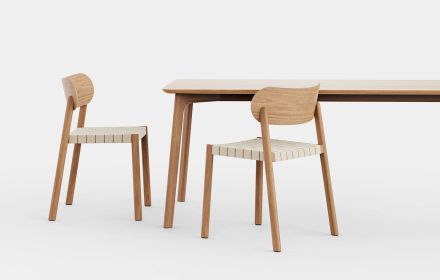
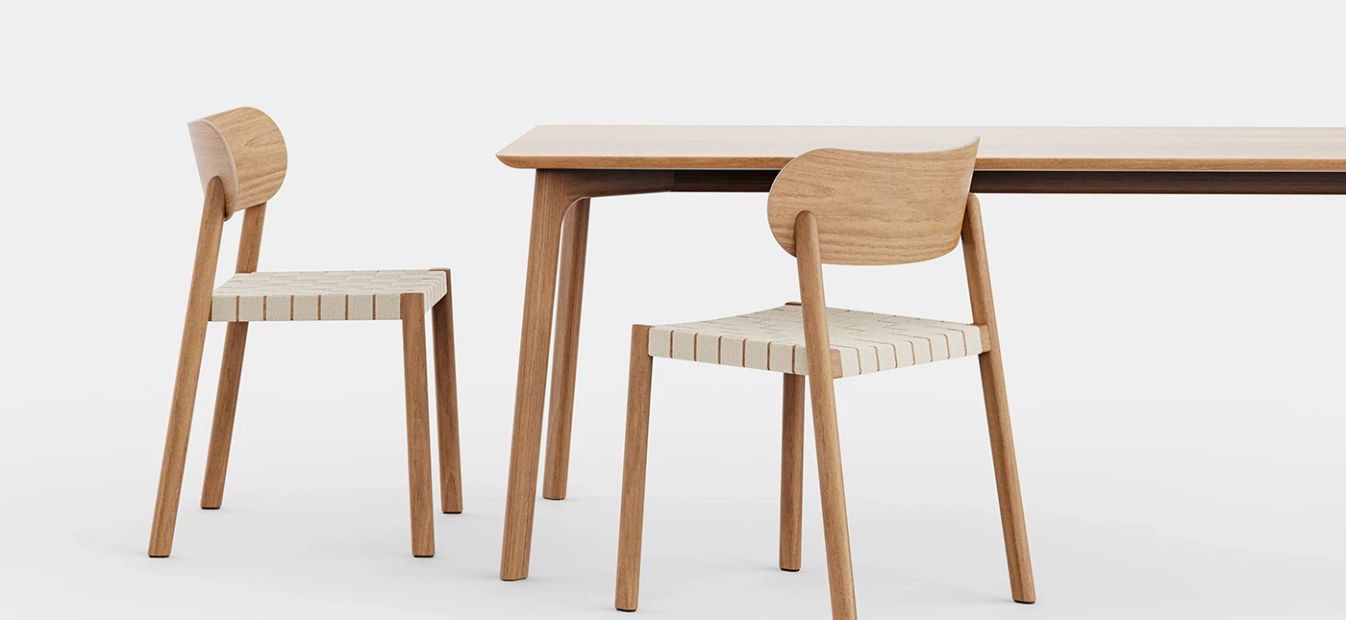
Thanks to Studio Kowalewski for the image: https://www.andreaskowalewski.com
Try it on one file.
Free to start · no credit card required