
A Prize-Winning Microscope Video Is Under Investigation. The Real Question Is: Where’s the Proof?
For 15 years, Nikon’s Small World In Motion competition has celebrated a particular kind of creativity: scientists who spend long hours in dark rooms, peering…
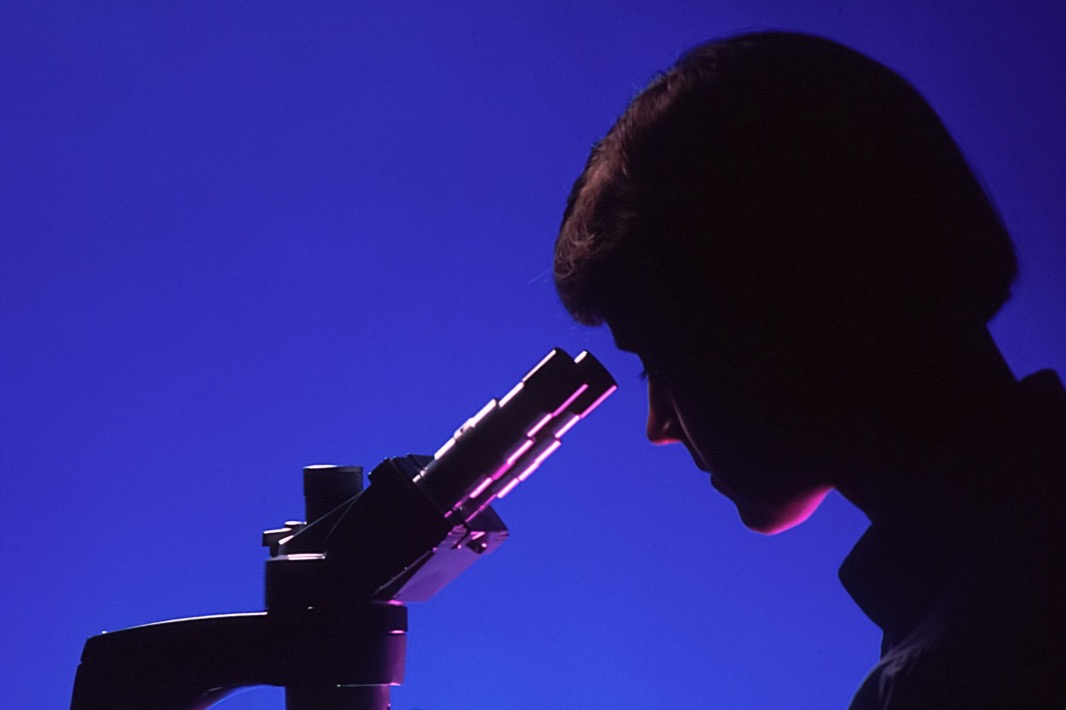
For 15 years, Nikon’s Small World In Motion competition has celebrated a particular kind of creativity: scientists who spend long hours in dark rooms, peering down powerful microscopes, capturing the hidden movement of life at a scale most of us never see. It is one of the few places where science and art meet on equal terms.
This year, the winning entry has become the subject of a very modern controversy.
The winner was Dr Ning Xu, a researcher at Tsinghua University in China. He submitted a short video said to show cilia, the tiny hair-like structures that line our airways, moving inside the airway of a child with a rare disease. Shortly after the result was announced, other scientists began raising concerns that the video had been made, at least in part, with AI.
The criticisms are specific. One associate professor noted that some structures seem to appear and disappear without explanation. Others questioned whether the cilia were simply too large to be biologically plausible. A PhD student at UT Southwestern Medical Center claimed the source image appeared to carry a watermark associated with AI generation. Two former competition judges reportedly shared similar doubts.
Xu denies breaking any rules. He has acknowledged that AI was used to help distinguish and visualise features in reconstructed greyscale images, but insists that “AI was not used to generate the experimental movie, the cilia, or their motion.” Nikon says he is cooperating fully, has supplied additional technical documentation, and that, so far, the company has not found any rule violations. An update is expected soon.
It’s important to be fair here. Nothing has been proven either way, and heavy image processing is a normal, legitimate part of microscopy. The vivid colours in Xu’s video, for example, are standard practice and explicitly permitted. But the controversy exposes a problem that reaches far beyond one competition.
The line between “processed” and “generated” is getting blurry
The contest’s rules are clear in principle: no generative AI is allowed, and the footage must genuinely be captured under a microscope. In practice, though, modern imaging pipelines involve many steps between the raw capture and the final result: reconstruction, denoising, segmentation, colouring. AI tools are increasingly embedded in several of those steps.
So when someone asks “was this made with AI?”, the honest answer is often “which part?” Using a machine-learning tool to sharpen a real signal is very different from asking a model to invent structures that were never there. Yet from the outside, looking only at the finished video, those two scenarios can be extremely hard to tell apart.
That’s why this dispute is playing out the way it is. Critics are pointing at visual oddities and possible watermarks. The creator is producing technical documents after the fact. Judges and organisers are left trying to reconstruct a process that nobody recorded in a way an outsider could independently verify at the time.
The burden always lands on the creator, and always too late
We’ve seen this pattern before, in literary prizes, design competitions, and client disputes. An accusation comes fast and publicly. The creator’s reputation takes the hit immediately. Then, under pressure, they have to piece together evidence of how their work was actually made.
Dr Patrick Hickey, who placed fifth in this year’s competition, made a point worth repeating: the recognition matters more than the $3,000 prize. For scientists, this is a rare chance to share years of painstaking work with the public. That cuts both ways. If the winning entry broke the rules, it’s unfair to every honest entrant. If it didn’t, an innocent researcher is having their name dragged through a very public debate. Either way, the lack of a clear, verifiable record is hurting everyone involved.
Provenance should be built in, not reconstructed
As AI tools become better and more deeply woven into how creative and scientific work gets made, “prove it’s real” is going to become one of the most common questions any creator faces. Visual inspection won’t settle it. AI detectors won’t settle it either, since they’re notoriously inconsistent. What settles it is a record of the process itself: what was captured, when, and what happened to it at each stage.
That’s the gap CertifyIP was built to close. Instead of scrambling to assemble evidence once a dispute begins, creators can log their process as they work. Each stage is recorded as tamper-proof, timestamped proof, so the history of a piece of work exists before anyone questions it. Whether you’re an illustrator, a designer, a musician, or a researcher submitting footage to a competition, being able to show your work, literally, step by step, changes the conversation from “defend yourself” to “here’s the record.”
Nikon’s investigation will reach its own conclusion, and Xu may well be fully vindicated. But the lesson for every creator is already clear. The question isn’t whether your work will ever be challenged. It’s whether you’ll have the proof ready when it is.
Originally published on Medium. Join the conversation there.
Try it on one file.
Free to start · no credit card required
Keep reading
THOUGHT LEADERSHIPA Prize-Winning Microscope Video Is Under Investigation. The Real Question Is: Where’s the Proof?
2 Oct 2026 · 5 min read THOUGHT LEADERSHIP
Award-winning French author accused of using AI to write their latest novel
25 Sept 2026 · 4 min read THOUGHT LEADERSHIP